
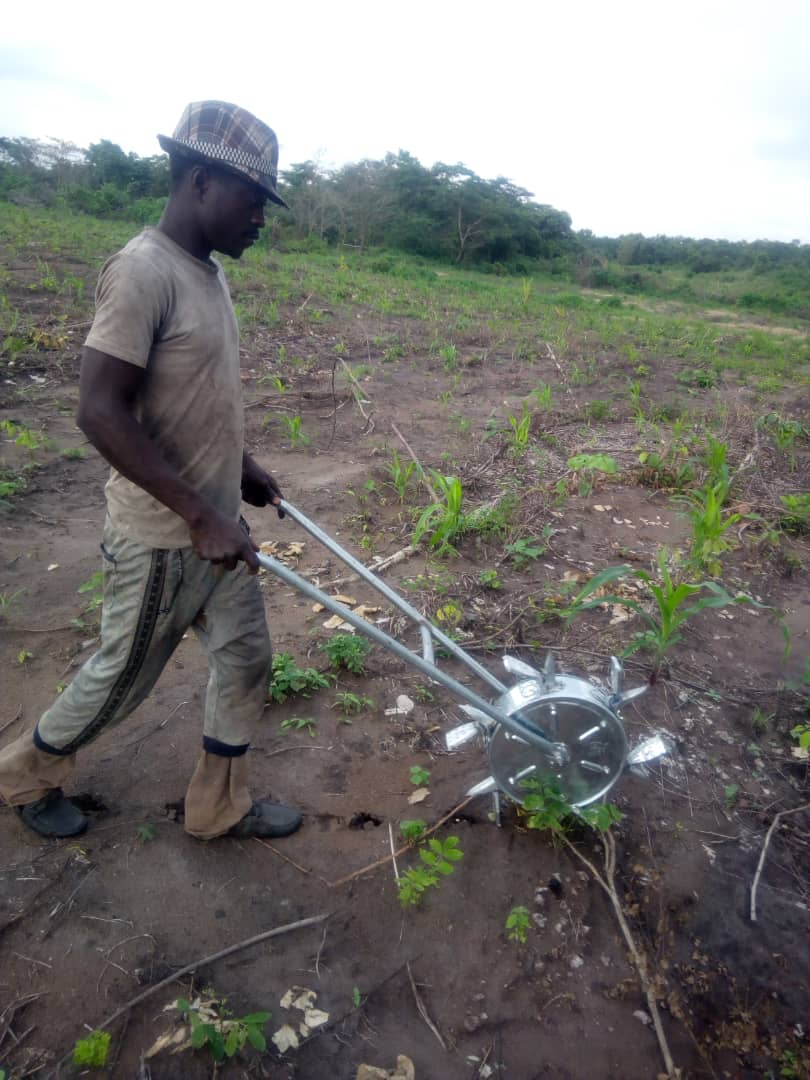
Agricultural research has generated a wide range of technologies that demonstrably improve yields, resource efficiency, and environmental outcomes under experimental conditions. Improved seed varieties, precision nutrient management, conservation practices, and digital advisory tools have all shown strong performance in trials and pilot programs. Yet, despite this evidence, adoption rates among farmers often remain low or uneven across regions. This disconnect between proven effectiveness and real-world uptake raises important questions about how agricultural innovations move from research to practice. Adoption is often viewed as a straightforward information problem, assuming farmers will adopt once they are informed of the benefits. In reality, adoption is a complex socio-economic process shaped by risk, context, and lived experience.
One key factor limiting adoption is risk perception among farmers. Even when a technology has demonstrated benefits, farmers must weigh the possibility of failure against the security of their existing livelihood. Many smallholder and resource-limited farmers operate near economic thresholds, where a single poor season can have lasting consequences. Trying a new practice may expose them to unfamiliar risks related to timing, labor demand, or yield variability. Research trials rarely reflect the financial vulnerability faced by these farmers. As a result, technologies that appear “low risk” to researchers may be perceived as highly risky by farmers.
Economic constraints further shape adoption decisions in ways that are often underestimated. Technologies promoted as cost-effective may still require upfront investments that exceed farmers’ cash flow or credit access. Even modest costs for improved seed, soil testing, or equipment can be prohibitive when liquidity is limited. Additionally, benefits may accrue gradually over multiple seasons, whereas costs are incurred immediately. Farmers are understandably cautious about investments with delayed or uncertain returns. Without access to affordable credit, insurance, or subsidies, adoption remains economically constrained regardless of technical merit.
Institutional and infrastructural limitations also play a significant role in shaping adoption outcomes. Weak extension systems reduce opportunities for hands-on training and follow-up support, which are critical for successful implementation. Poor access to input suppliers, repair services, and output markets increases transaction costs associated with new technologies. In many regions, farmers lack reliable information channels to troubleshoot problems once adoption begins. Research recommendations often assume institutional support that does not exist on a large scale. When these support structures are absent, adoption becomes difficult to sustain.
Social and cultural factors further influence farmers’ willingness to adopt new practices. Farming decisions are deeply rooted in local knowledge systems, traditions, and peer networks. Practices that conflict with established norms may be viewed with skepticism, regardless of scientific evidence. Farmers often rely on trusted neighbors and community leaders rather than formal research institutions for guidance. Technologies that do not align with local experience or visibly succeed within the community spread slowly. Adoption is therefore as much a social process as a technical one.
Another frequently overlooked issue is the mismatch between research objectives and farmer priorities. Researchers often focus on maximizing yields, input efficiency, or environmental indicators, while farmers prioritize income stability, labor savings, and risk reduction. A technology that increases yield but demands additional labor may be unattractive to households with limited labor availability. Similarly, practices that improve long-term soil health may be deprioritized when short-term income needs dominate decision-making. When research outputs fail to align with farmers’ immediate goals, adoption naturally lags. Relevance, not just performance, determines uptake.
Communication gaps between researchers and farmers also limit the potential for adoption. Research findings are often communicated through technical language or generalized recommendations that lack practical nuance. Farmers may struggle to translate experimental results into field-level decisions under variable conditions. One-way knowledge transfer models overlook farmers’ experiential knowledge and adaptive strategies. Without participatory engagement, technologies may be perceived as externally imposed rather than co-developed. Effective adoption requires dialogue, not dissemination alone.
A systems-based approach is needed to improve adoption outcomes across agricultural landscapes. This involves integrating agronomic performance with economic feasibility, institutional capacity, and social context. Technologies should be tested under real farm conditions, including variability in soils, climate, and management. Extension systems must emphasize adaptive learning rather than fixed prescriptions. Policies that reduce financial risk and strengthen market access can further enable adoption. Ultimately, agricultural innovation succeeds not when it works in trials, but when it fits farmers’ realities and decision-making environments.


