Climate change is often presented as the defining challenge for agriculture in the twenty-first century. Rising temperatures, shifting rainfall patterns, and increasing atmospheric carbon dioxide concentrations are widely cited as threats to global food production. While these long-term trends are real and important, for many smallholder farmers the more immediate and disruptive challenge is not gradual climate change, but climate variability. Year-to-year and within-season fluctuations in rainfall, temperature, and extreme weather events often pose a greater risk to farm productivity, income stability, and decision-making than long-term climate trends. Climate change refers to persistent, long-term shifts in average climate conditions over decades. Climate variability, by contrast, describes short-term deviations from those averages, including irregular rainfall onset, dry spells within the growing season, heat waves, and extreme precipitation events. For smallholder farmers who depend heavily on rain-fed agriculture and operate with limited financial buffers, these short-term fluctuations can be devastating. A single failed season caused by delayed rains or unexpected drought can erase household savings, reduce food availability, and undermine trust in farming as a viable livelihood.
One reason climate variability is particularly damaging is that it directly interferes with critical farm management decisions. Farmers must decide when to plant, what crop varieties to use, how much input to apply, and whether to invest in labor or mechanization. These decisions are often based on historical climate patterns and local experience. When rainfall onset becomes unpredictable or when dry spells occur at sensitive crop growth stages, traditional decision rules break down. Farmers may plant too early and lose seedlings to drought, or plant too late and miss optimal growing conditions. Unlike gradual climate change, which can be anticipated and planned for over time, climate variability introduces uncertainty that is difficult to manage with limited information and resources.
Yield losses associated with climate variability are often larger than those attributed to gradual warming alone. Short dry spells during flowering or grain filling can cause disproportionate yield reductions, even if total seasonal rainfall appears adequate. Similarly, brief heat waves can severely affect pollination and crop development. These impacts are often missed when climate risk is discussed only in terms of annual averages. From a farmer’s perspective, it is not the average temperature or rainfall that determines success, but whether conditions align with crop needs at critical moments.
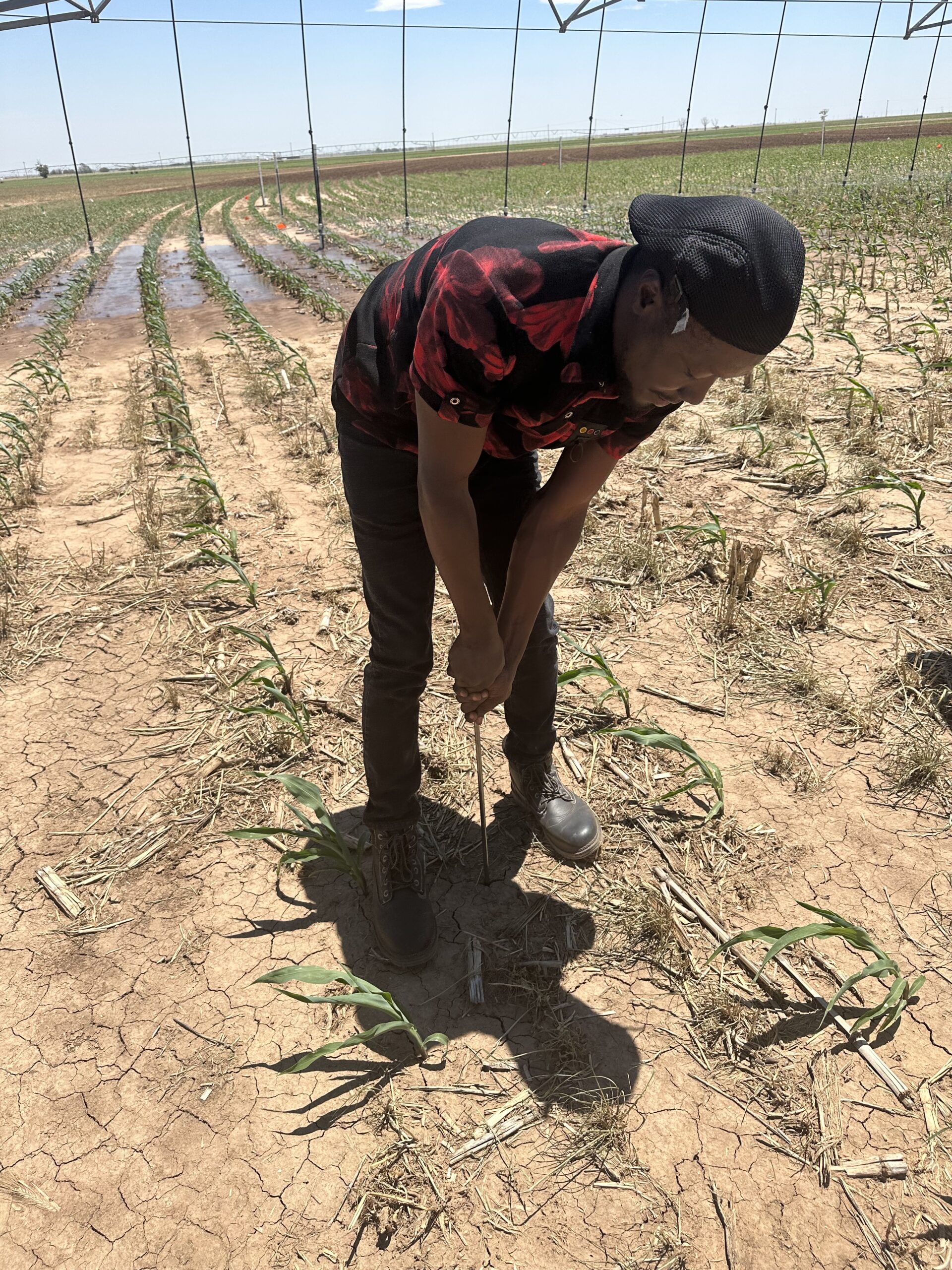
Climate variability also interacts strongly with soil conditions, amplifying its effects. In many smallholder systems, soils are degraded, compacted, or low in organic matter, reducing their ability to retain water and buffer crops against short-term moisture stress. In such contexts, even modest rainfall variability can translate into severe crop stress. Two farms experiencing the same weather conditions may perform very differently depending on soil health. This explains why climate variability is often felt more acutely in low-input systems than in well-managed or irrigated farms. Improving soil structure and water-holding capacity can reduce vulnerability, but these investments require time, knowledge, and resources that are often scarce.
Another reason climate variability poses a greater risk than long-term climate change is its effect on income stability and risk perception. Farmers can sometimes adapt to gradual changes by shifting crop types, adjusting planting calendars, or adopting improved varieties. However, when outcomes become highly unpredictable from one season to the next, farmers may become risk-averse. This can discourage investment in improved inputs, reduce adoption of new technologies, and lock households into low-productivity systems. In this way, climate variability can slow agricultural development even when average climate conditions remain suitable for crop production.
Policy and development interventions often underestimate the importance of variability by focusing on long-term climate projections while neglecting short-term risk management. Climate adaptation strategies frequently emphasize future temperature increases or changes in average rainfall, but provide limited tools to help farmers cope with seasonal uncertainty. Early warning systems, seasonal climate forecasts, and flexible management recommendations are often underdeveloped or poorly communicated. As a result, farmers are left to absorb climate shocks individually, with little institutional support.
Addressing climate variability requires a shift in how agricultural resilience is framed. Rather than focusing exclusively on long-term climate change, greater emphasis should be placed on risk management, flexibility, and buffering capacity. This includes improving soil health to enhance moisture retention, promoting crop diversification to spread risk, and strengthening access to timely climate information. It also involves recognizing that resilience is not only a technical issue, but a socioeconomic one. Access to credit, insurance, and markets can determine whether a farmer can recover from a bad season or is pushed deeper into vulnerability.
Importantly, climate variability should not be viewed as a future problem. It is already shaping farmer outcomes today. In many regions, farmers report that rainfall has become more erratic even when total seasonal amounts have not changed dramatically. These perceptions align with observed increases in rainfall variability in many tropical and subtropical regions. Ignoring these dynamics risks misdiagnosing the problem and promoting adaptation strategies that fail to address farmers’ most immediate concerns.
In conclusion, while long-term climate change remains a critical global challenge, climate variability represents a more immediate and practical risk for smallholder farmers. Its impacts are felt directly at the farm level, disrupting decision-making, reducing yields, and increasing economic uncertainty. Building resilient agricultural systems therefore requires moving beyond averages and projections, and instead focusing on the short-term fluctuations that shape real-world farming outcomes. By prioritizing strategies that enhance flexibility, buffer against shocks, and reduce uncertainty, agricultural research and policy can better support farmers navigating an increasingly variable climate.


