
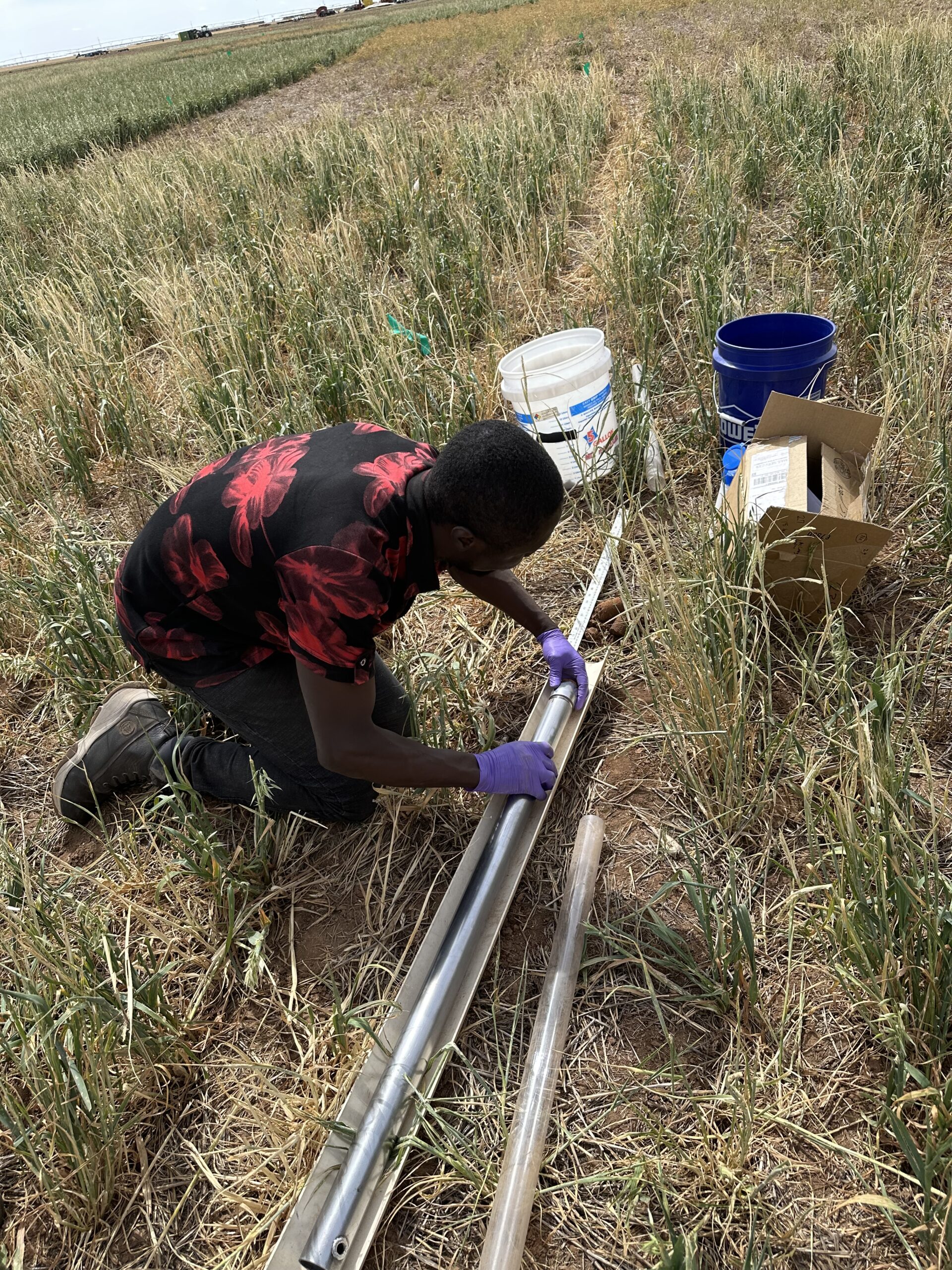
Farm investment decisions are often guided by assumptions rather than evidence, especially in contexts where data are limited or unreliable. Farmers may assume that higher input use automatically leads to higher profits, or that adopting a popular technology guarantees success. These assumptions are reinforced by extension messaging, peer experiences, and anecdotal success stories. However, farming systems are complex, and outcomes depend on interactions among soils, climate, markets, and management. Decisions based solely on assumptions can therefore expose farmers to unnecessary risk. Evaluating farm investments based on evidence rather than intuition is essential for enhancing decision quality and financial resilience.
One common assumption is that technologies proven effective elsewhere will perform similarly in all contexts. Research results are often generalized beyond the environments in which they were generated. Differences in soil type, rainfall patterns, and management capacity can substantially alter outcomes. A fertilizer rate that is profitable in one region may be inefficient or risky in another. Without local evidence, farmers may invest in inputs that are poorly matched to their conditions. This highlights the danger of extrapolating results without accounting for contextual variability.
Economic assumptions also distort investment decisions when costs and returns are not fully assessed. Farmers may focus on increasing gross yields while overlooking changes in production costs. Input-intensive practices often result in increased expenses related to labor, fuel, and maintenance. If these costs are underestimated, profitability projections become overly optimistic. Evidence-based evaluation requires tracking both costs and revenues over time. Partial budgets and simple cost–benefit analyses can reveal whether investments truly improve net returns.
Risk is another dimension frequently ignored in assumption-driven decision-making. Many investment evaluations implicitly assume average weather and stable markets. In reality, farming outcomes are shaped by variability and uncertainty. A practice that performs well under average conditions may fail during adverse seasons. Evidence-based evaluation should therefore consider performance across multiple years and scenarios. Incorporating risk into investment assessment helps farmers avoid strategies that perform well only under ideal conditions.
Soil conditions play a critical but often overlooked role in determining investment outcomes. Inputs such as fertilizers, improved seeds, or irrigation interact strongly with soil’s physical and biological properties. In soils with low organic matter or poor structure, responses to inputs may be limited. Assuming uniform soil responsiveness leads to overinvestment and disappointing returns. Evidence-based approaches emphasize diagnosing soil constraints before committing resources. Aligning investments with soil capacity improves both efficiency and resilience.
Market dynamics further complicate the evaluation of farm investments. Increased production does not automatically translate into higher income if markets are saturated or prices volatile. Farmers may invest in yield-enhancing technologies only to face lower prices at harvest. Transportation costs, storage losses, and bargaining power also influence realized returns. Evidence-based evaluation requires understanding market conditions alongside production potential. Ignoring markets turns technically sound investments into economic liabilities.
Access to information and decision-support tools shapes how evidence is used at the farm level. Many farmers rely on experience and informal networks because formal data are scarce or inaccessible. Simple record-keeping, yield tracking, and input logs can generate valuable evidence over time. On-farm trials, even small ones, allow farmers to test practices under their own conditions. These localized data often provide more relevant insights than generalized recommendations. Empowering farmers to generate and interpret evidence strengthens decision-making autonomy.
From an institutional perspective, promoting evidence-based investment evaluation requires rethinking extension and advisory approaches. Rather than prescribing fixed recommendations, advisors can support farmers in assessing trade-offs and risks. Decision tools should be simple, transparent, and adaptable to local contexts. Training programs that emphasize critical evaluation over rule-following encourage learning and adaptation. This shift recognizes farmers as analysts of their own systems rather than passive adopters. Evidence-based thinking becomes a skill, not just a set of data.
Research also has a role in supporting better investment evaluation by producing context-relevant evidence. Long-term trials, systems experiments, and economic analyses provide insights into variability and trade-offs. Integrating agronomic data with economic and risk metrics enhances relevance. Models can help explore scenarios, but their assumptions must be transparent and grounded in field data. When research outputs align with farmers’ decision-making frameworks, evidence is more likely to be utilized. Bridging research and practice depends on shared evaluation criteria.
Moving from assumption-driven to evidence-based farm investment decisions is not about eliminating uncertainty, but about managing it more intelligently. Evidence provides a way to test expectations, refine strategies, and learn from outcomes. It shifts the focus from promises to probabilities and from short-term gains to sustained performance. Farmers who evaluate investments based on evidence are better positioned to adapt to changing conditions. This approach supports both resilience and profitability. In complex agricultural systems, better decisions come not from certainty, but from informed judgment grounded in evidence.


